Is your paddle grip not working like it used to? Does it slip during serves, or does it feel less tacky? Don’t worry, it’s time to change your pickleball paddle grip.
Whether you want to switch to a new grip or add an overgrip, this guide will show you how. Let’s get your paddle feeling fresh and ready to play.
How to Replace a Pickleball Paddle Grip (Full Replacement)
Let’s get started. Here’s how to fully refresh your paddle grip.
What You’ll Need to Replace Your Grip:
- Sharp scissors
- New grip or overgrip
- Finishing tape (often included)
- Optional: rubbing alcohol and a cloth
Step 1: Remove the Old Grip
- Start peeling at the top where the finishing tape ends.
- Unwrap the old grip down to the bare handle.
- Clean off any leftover residue.
Step 2: Start Wrapping from the Bottom
- Locate the tapered end of the new grip.
- Peel off the adhesive backing.
- Attach it to the end of the handle and press it down firmly.
Step 3: Wrap It Tight
- Pull the grip tight and wrap it upward in a spiral.
- Slightly overlap each layer for an even surface.
- Keep the tension consistent.
- Make sure the grip isn’t loose, as this can cause it to slip during play.
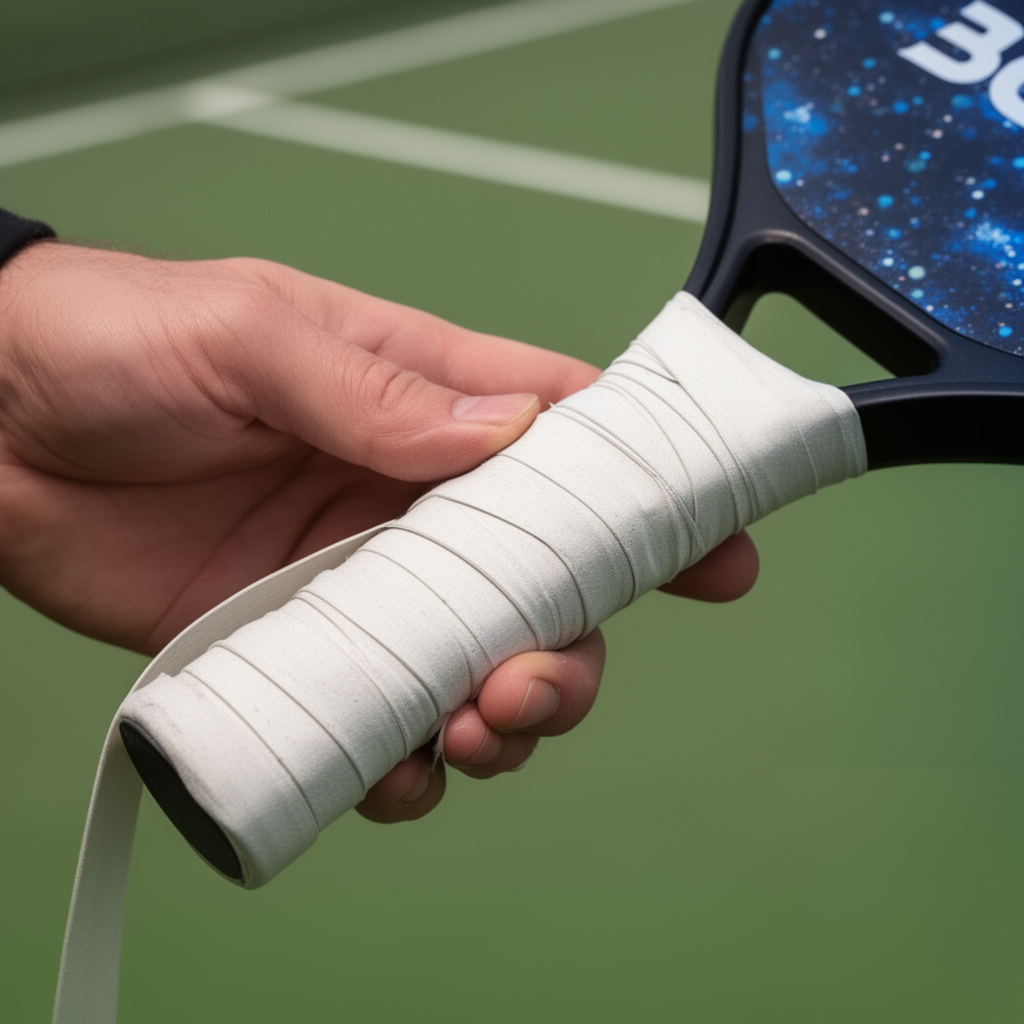
Step 4: Secure It
- Trim any extra grip at a slight angle.
- Use finishing tape to seal the top edge.
Now your paddle should feel like new.
How to Add an Overgrip to a Pickleball Paddle (Fast and Easy)
If you don’t want to replace the whole grip, try using an overgrip. It goes right on top of your current grip.
Step-by-Step:
- Remove the backing from the overgrip.
- Start at the bottom of the handle.
- Wrap diagonally with slight overlap.
- Finish at the top and secure with tape.
Change your overgrip often to keep it feeling tacky and comfortable.
Why Should You Change Your Pickleball Grip?
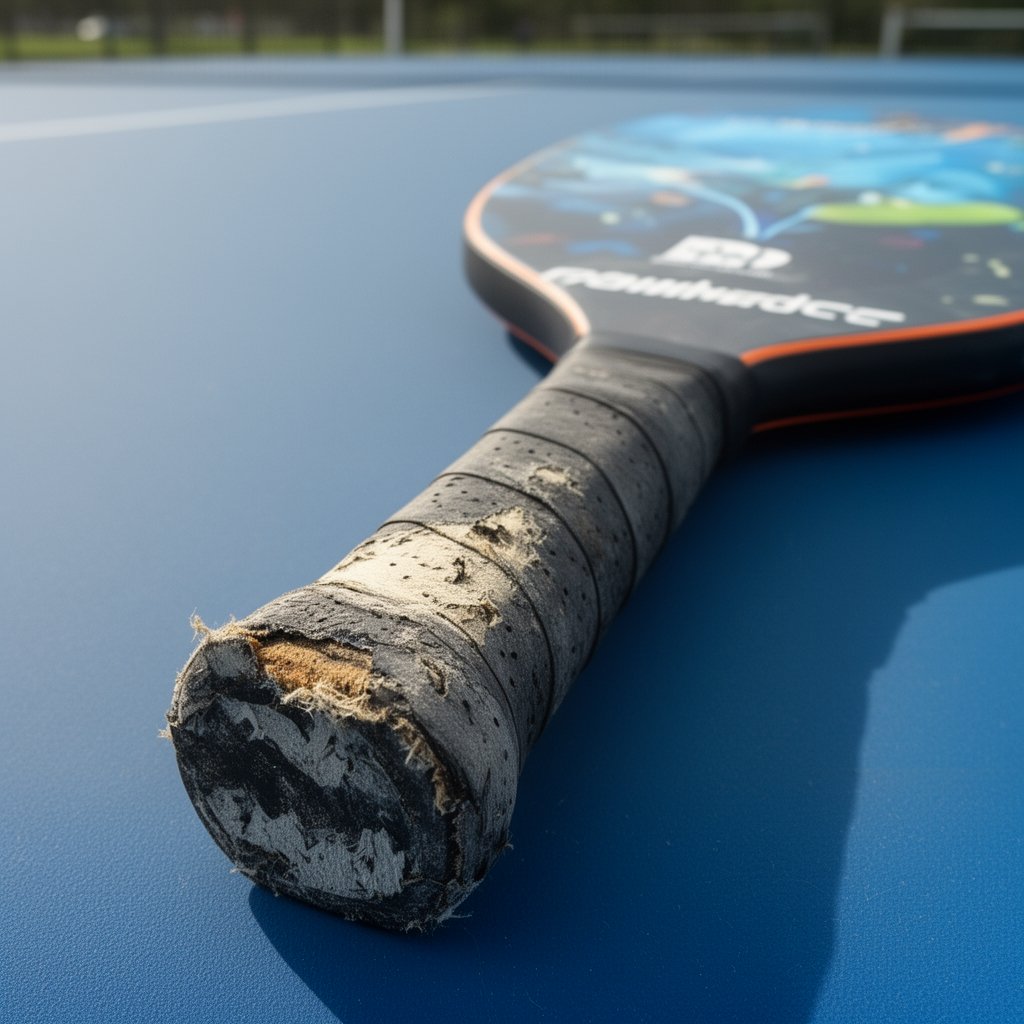
Over time, pickleball grips lose their stickiness, shape, and comfort. This can make it harder to control your paddle and play consistently.
You might need a new grip if:
- Your paddle slips while playing
- The grip feels flat, smooth, or worn
- You experience hand fatigue or blisters
A new grip can help you play better by giving you:
- Increased control
- Reduced slippage
- More confidence in shots
Replacement Grip vs. Overgrip: What’s the Difference?
Replacement Grip
- Fully replaces the original grip
- Adds cushion and tackiness
- Ideal when the original is worn down
Overgrip
- Goes on top of your current grip
- Adds tackiness and thickness
- Great for quick refreshes or personal customization
Many experienced players use both a replacement grip and an overgrip for the best feel.
Grip Maintenance Tips
Maintaining your pickleball paddle grip is essential for consistent performance and injury prevention.
Regular maintenance, including cleaning and timely replacement, helps extend your paddle’s life and keeps your gameplay sharp and reliable.
To keep your grip in top condition, we recommend:
- Wipe your grip regularly with a damp cloth
- Avoid leaving your paddle in heat or moisture
- Rotate paddles if you play often
- Use grip powder or gloves if your hands sweat
Read our guide on how to clean your pickleball paddle to learn more.
Changing a Pickleball Paddle Grip FAQs
How often should I replace my grip?
Consider replacing your grip every 3 to 6 months, depending on how often you play. Overgrips may need changing monthly.
Can I stack an overgrip on top of a new pickleball grip replacement?
Yes, adding an overgrip is a typical setup for added cushion and grip texture.
What brand of pickleball grip is best?
Gamma, Tourna, and ProLite are top picks among pickleball players.
Final Thoughts
Changing your paddle grip is an easy way to improve your game. Whether you choose a full replacement or just add an overgrip, you’ll notice better feel, more control, and greater comfort right away.
Try it out and see how much it helps on the court.
Looking for a new paddle? Explore our comprehensive pickleball paddle reviews.