If you’ve ever borrowed a friend’s paddle and wondered why it feels so different, you’re not imagining things.
Yes, surface material matters. Yes, shape matters. But the secret “personality” of a paddle often comes down to one thing most people never think about.
It’s the core.
The core affects how soft or firm the paddle feels, how much pop you get on drives, how steady you feel at the kitchen, and even how loud it sounds when you hit the ball. Let’s break it down in simple terms.
What Is a Pickleball Paddle Core, And Why Should You Care?
The core is the material inside your paddle. Think of it like the engine under the hood. Two paddles can look similar on the outside but feel wildly different because their insides are built differently.
Why you should care:
- The core changes touch and control
- It influences power and pop
- It affects forgiveness on off-center hits
- It even impacts sound, which is a real clue to how a paddle plays
The Core Basics: Polymer, Nomex, and Aluminum
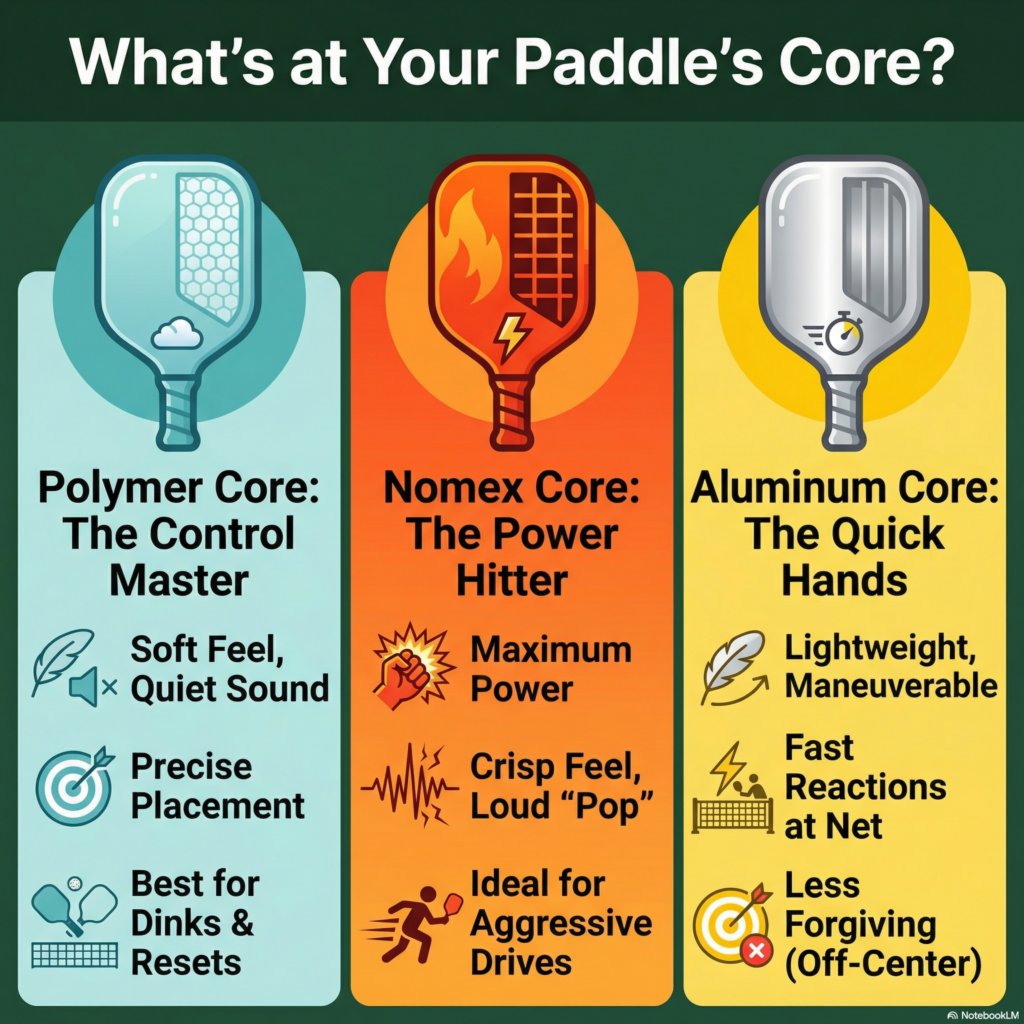
Polymer (honeycomb)
The most common core today. It tends to feel softer, more controlled, and quieter. Great for players who live at the kitchen and want consistency.
Nomex (honeycomb)
A firmer, punchier core known for power and that signature loud pop. If you like your paddle to feel crisp and explosive, Nomex often delivers.
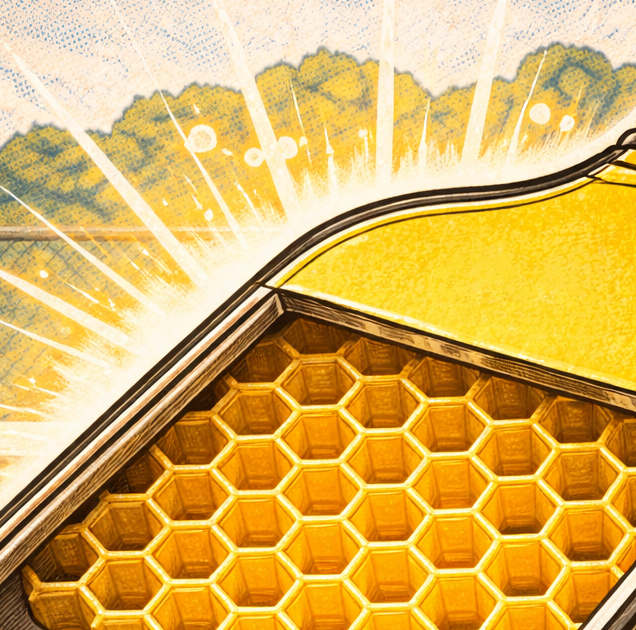
Aluminum (honeycomb)
Lightweight and quick in the hands, but typically less forgiving. Some players love the fast maneuverability, especially at the net, but mishits can feel harsher.
Core Type vs. Feel, Power, Sound
| Core Type | Feel | Power | Sound |
| Polymer | Soft, plush, controlled | Medium, more steady than explosive | Quiet to moderate thud |
| Nomex | Firm, crisp, reactive | High, pop heavy | Loud ping or pop |
| Aluminum | Light, quick, sharper feedback | Medium, fast hands more than raw power | Higher pitched tink |
How Paddle Cores Impact Performance
You don’t need a physics degree. You just need to know how the core affects your game when it counts.
Control and Feel on Dinks and Drops
This is where choosing a core becomes personal.
- Softer cores, often polymer, tend to give you that hold or dwell time feeling. The ball feels like it sits on the paddle for a split second longer, which helps with touch shots, resets, and gentle angles.
- Firmer cores, often Nomex, can feel more springy and immediate. That can be great if you are confident, but it may punish you if your soft game is still developing.
- Aluminum can feel quick and precise in hand-to-hand battles, but on delicate dinks, it can be less forgiving if your contact is slightly off.
If you often hit dinks too long, your core might be giving you more rebound than you need.
Power on Drives and Smashes
Power isn’t just about strength. It’s also about how the paddle returns the ball.
- Nomex is known for that fast, lively response. When you swing, it feels like the paddle helps you launch the ball.
- Polymers often produce power in a more controlled way. You can still drive hard, but it can feel more predictable rather than jumpy.
- Aluminum is not usually the first pick for raw power, but it can feel snappy because it is light and quick to accelerate.
If you like to attack and speed up the game, your core choice can either boost that or help you slow things down when needed.
The Sound Factor and What It Tells You
Sound isn’t just noise or a show-off move. It’s feedback.
- Nomex often has that unmistakable ping, almost like a ping pong paddle or a sharp pop that turns heads.
- Polymer usually sounds more like a thud or muted pop.
- Aluminum can land in a tink zone, higher-pitched and crisp.
In general:
- Louder often means firmer and more reactive
- Quieter often means softer and more control-friendly
Sound is the easiest thing to notice when you try paddles in person.
Which Paddle Core Is Right for Your Style of Play?
You don’t need the best core. You need the one that matches how you play now and how you want to play.
For Control-Oriented Players
You probably:
- dink a lot
- reset under pressure
- value placement over pure speed
- hate when the ball launches unexpectedly
Best match: Polymer core
Polymer cores are usually quieter, softer, and easier to trust for soft shots. You get a more forgiving feel when you’re trying to land drops in the kitchen and keep volleys low.
Think of polymer as a steady steering wheel. It helps you guide the ball where you want, not where the paddle wants.
For Power Players
You probably:
- love drives and put aways
- speed up often
- win points by attacking first
- enjoy a crisp, lively feel
Best match: Nomex core
Nomex cores are usually firmer and punchier, with that classic loud pop. If you want your paddle to feel explosive, Nomex gives you that instant response.
Think of Nomex as a “ping,” it’s loud, quick, and confident.
For All Arounders
You probably:
- mix soft and hard
- play both doubles and singles
- want a paddle that does everything reasonably well
- care about comfort and consistency
Best match: usually polymer, or a paddle that blends a controlled core feel with enough pop for drives
Most modern paddles use polymer because it keeps you balanced. You can still hit hard, but you’re less likely to lose your touch on soft shots.
If you’re still figuring out your style, polymer is usually the safest place to start.
One Simple Way to Choose A Paddle Core Without Overthinking It
If your biggest goal is:
- More touch, more forgiveness: go polymer
- More pop, more punch, more ping: try Nomex
- Faster hands, lighter feel, more precision feedback: consider aluminum
If you can, try a few paddles back-to-back. You’ll notice the difference within five minutes of dinks and a few drives.
Shopping for a new paddle? Read our in-depth pickleball paddle reviews.