
The Paddletek Bantam ESQ-C addresses an interesting gap in the premium paddle sector since it offers the lively power and snap typical of Paddletek’s Bantam range but incorporates that performance into a broad, conventional-shaped paddle rather than one with an elongated frame.
The ESQ-C was developed with pro player Andrea Koop. It features an 8-inch-wide face, a long 5.5-inch handle, and a low swing weight. This setup gives players a large hitting area but keeps the paddle quick during fast exchanges at the kitchen.
Its PT-700 raw carbon fiber surface produces excellent spin, while the Bantam QRT polymer core provides immediate pace off the face. Players can choose between a thinner 12.7 mm version and a slightly more controlled 14.3 mm version.
The ESQ-C is not a soft, plush control paddle. Its lively response requires disciplined hands, especially when dinking or resetting. For aggressive intermediate and advanced players, however, it offers an uncommon combination of speed, spin, power, and forgiveness.
Dink Sink Pickleball Club participates in partner programs. This means some of the links we share may be affiliate links. If you click on one of these links and make a purchase, we may earn a small commission at no extra cost to you.
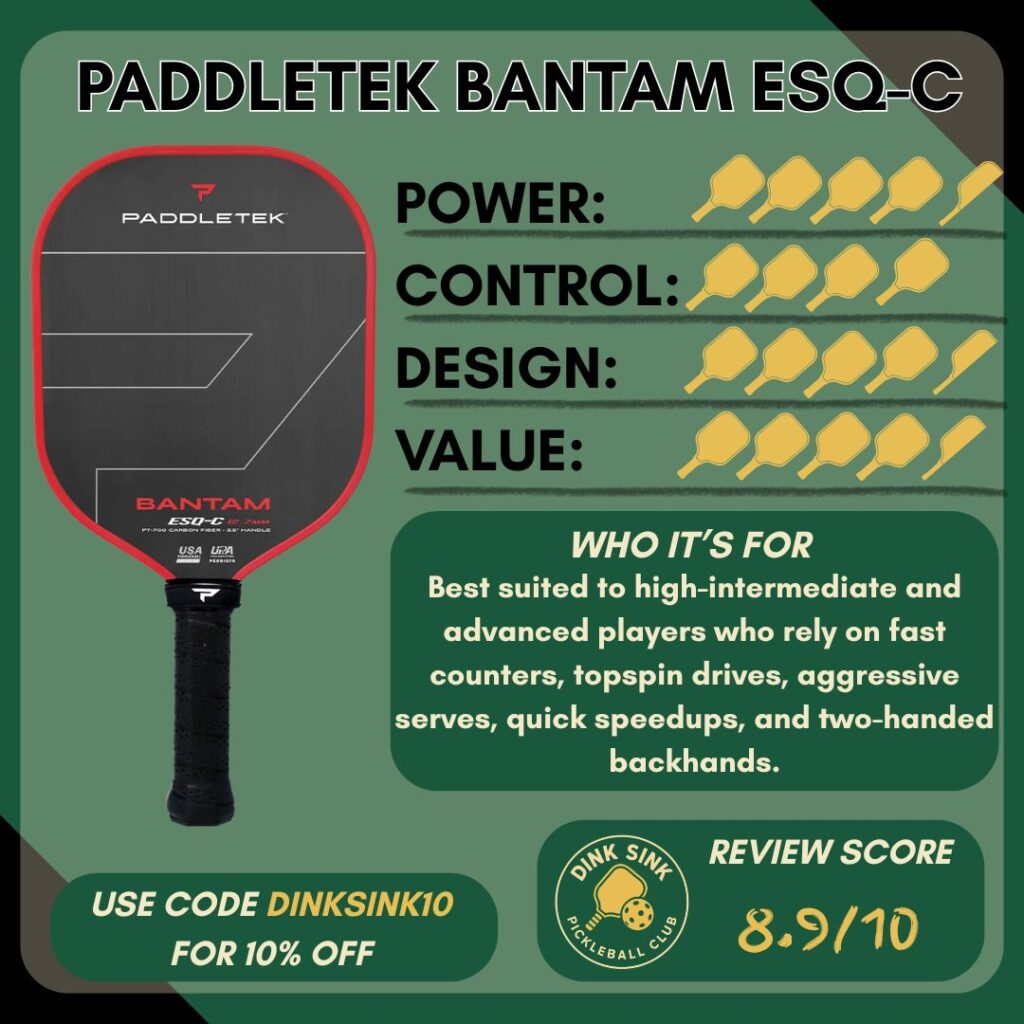
Dink Sink Pickleball Club Score: 8.9/10
Who Should Get the Paddletek Bantam ESQ-C Paddle
The Bantam ESQ-C is best for advancing intermediate and advanced players who want to attack without giving up the stability of a wide paddle face. It particularly suits players who rely on fast counters, topspin drives, aggressive serves, quick speedups, and two-handed backhands.
The ESQ-C achieves a score of 8.9 since it brings together a number of characteristics that are seldom found in the same item. It is powerful but doesn’t seem too heavy, it is maneuverable even though it has a unforgiving sweet spot, and it is suitable for spinning without having an elongated shape.
The main drawback is touch. The lively Bantam core can cause dinks and resets to go higher or deeper than you want if you lose paddle-face control. The 14.3 mm model helps a bit, but neither version is meant for players who prefer a soft, muted feel.
Go for the 12.7 mm version if you want maximum power and offensive speed, and select the 14.3 mm model if you prefer a more balanced combination of power, stability, and control.
| Pros | Cons |
| The lightweight construction makes the paddle exceptionally quick during counters and hand battles. | The lively response can make dinks, blocks, and resets difficult to control at first. |
| The raw carbon fiber face produces excellent topspin on serves, drives, and rolls. | The shorter face provides less reach than an elongated paddle. |
| The wide shape and perimeter weighting create a forgiving and stable hitting area. | Players seeking a soft, plush feel may find the impact response too firm and poppy. |
Paddletek Bantam ESQ-C Paddle Performance Metrics
Power 9.1/10
Power is one of the defining characteristics of the Bantam ESQ-C. The Bantam Quick Response Technology polymer core creates a fast, energetic rebound that helps players generate pace without taking an oversized swing.
The paddle is particularly effective on high-ball putaways, counters, overheads, and third-shot drives. It also creates enough free pace to pressure opponents during fast kitchen exchanges.
What makes the ESQ-C unusual is that it produces this power from a standard-shaped frame with a relatively low swing weight. Many powerful paddles depend on an elongated, head-heavy design to create momentum. The ESQ-C instead feels quick through the air and relies more heavily on its responsive core.
The 12.7 mm version is the more explosive option. It delivers sharper pop and a more immediate launch off the face. The 14.3 mm version retains strong putaway power but feels slightly calmer during blocks and transition shots.
Players coming from a control paddle should expect an adjustment period. Compact strokes are usually enough, and over-swinging can send drives or returns beyond the baseline.
Control 8.2/10
The ESQ-C offers better control than its power rating might suggest, but it still demands capable hands.
Its wide face and stable sweet spot make directional accuracy relatively dependable. Drop shots from the baseline can be executed consistently once the player becomes familiar with the paddle’s launch. The standard shape also creates a predictable contact area, which helps on blocks and defensive volleys.
The challenge appears during softer shots closer to the net. The core does not absorb much incoming pace, so players must use a relaxed grip and controlled paddle angle when resetting hard drives. Dinks can also sit up when contact is too firm.
The 14.3 mm model is the stronger choice for players concerned about touch. It provides a slightly more settled response and better stability through contact. The 12.7 mm version rewards aggressive hands but is less forgiving of technical mistakes during the soft game.
It isn’t the best first paddle for a beginner pickleball player, since experienced players who already know about grip pressure and paddle-face control will be able to use its touch more consistently.
Spin
Spin is arguably the ESQ-C’s best performance category.
The PT-700 unidirectional raw carbon fiber face grips the ball well and allows players to shape aggressive shots with confidence. Topspin serves can be hit with both depth and margin, while drives dip sharply enough to clear the net and still land inside the baseline.
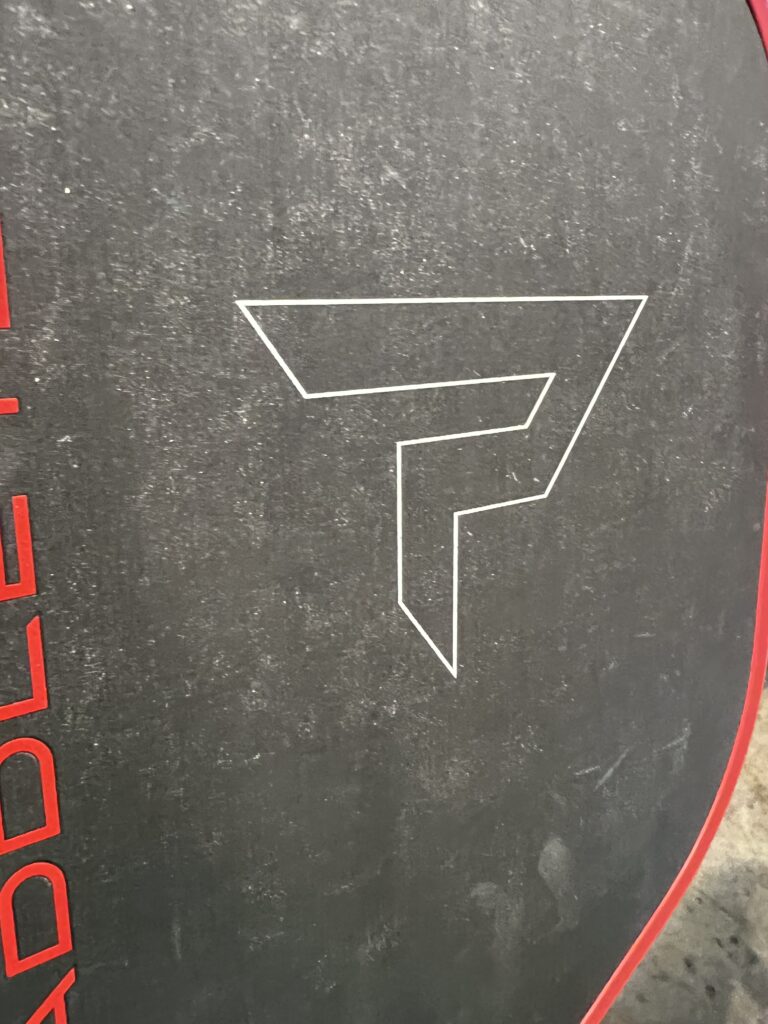
The long handle also gives players extra leverage when generating racquet-head speed. This is especially valuable on two-handed backhands, forehand rolls, and attacking shots from below net height. A former tennis player who thrives on a pickleball court with spin? Yeah, this paddle is for you!
At the kitchen, the paddle performs well on topspin speedups and roll volleys. Players can accelerate through the ball and bring it down into the court rather than relying only on flat pace.
Although slice is available, the paddle’s pop means that delicate underspin shots are slightly less intuitive than topspin shots. With soft backhand slices and cut dinks, more accurate touch is needed since the ball leaves the face quickly.
Overall, the ESQ-C belongs in the upper tier of spin-producing power paddles.
Design 9.0/10
The ESQ-C uses a standard 16-by-8-inch shape, but its design differs from many traditional wide-body paddles. The handle is longer, the frame is light, and the balance remains quick rather than becoming head-heavy.
Paddletek also uses a perimeter-based twist-weight and balance system to improve stability on off-center contact. This helps preserve the forgiving character expected from a wide paddle while maintaining the speed needed for aggressive net play.
The edge guard incorporates shock-absorbing technology intended to reduce vibration. The paddle still has a relatively crisp and lively impact feel, but it does not feel excessively harsh for such an offensive design.
Grip
The 5.5-inch handle is one of the ESQ-C’s strongest design features. It provides enough room for most two-handed backhands without forcing the player into an elongated paddle.
The handle also provides one-handed players with room to modify their grip or obtain extra leverage when carrying out serves and drives. This is great for a double-handed backhand, and makes it easy to switch between grips when transitioning from the baseline to the kitchen line.
The grip can feel somewhat substantial depending on hand size and personal preference. Players who like a thinner handle may want to replace the stock grip or use a minimal overgrip setup.
Weight
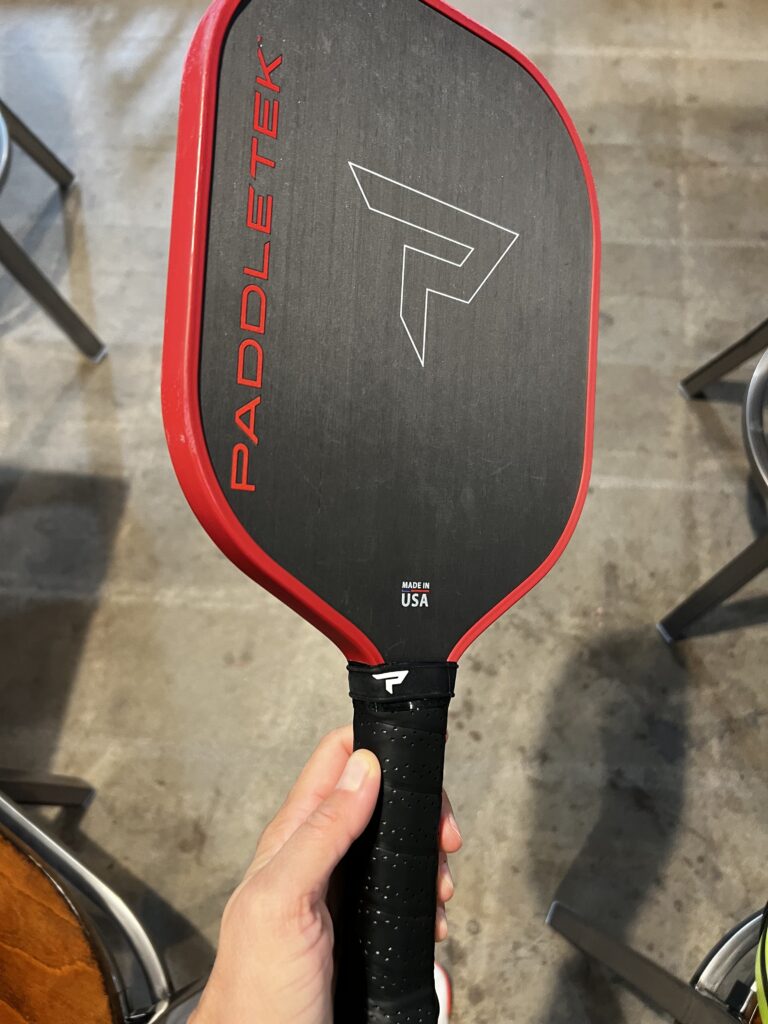
Paddletek lists the 12.7 mm model at approximately 7.5 to 7.8 ounces, placing it on the lighter side of the premium performance category.
The reason why the ESQ-C has such a quick feel is its low static weight; it is easy to prepare the paddle when carrying out quick rallies, to change direction on reaction shots, and to recover after an aggressive swing.
The tradeoff is less natural plow-through than heavier paddles. Some players add a bit of weighted tape near the lower sides of the face for more stability and drive. Make changes slowly, though, since too much weight can take away the ESQ-C’s quick feel.
Aerodynamics
The ESQ-C is very maneuverable for a powerful paddle. Its standard shape isn’t as aerodynamic as an elongated frame, but the low swing weight makes up for it.
During battles at the kitchen line, the paddle can be repositioned quickly without placing much strain on the wrist or shoulder. It also encourages compact counters because players do not need a large backswing to generate pace.
This combination of fast handling and a wide face is one of the paddle’s clearest competitive advantages.
Value 8.4/10
At its current manufacturer-listed price of $199.99, the Bantam ESQ-C offers solid value within the premium paddle category.
The construction includes a raw carbon fiber face, a proprietary performance core, perimeter stabilization, a vibration-reducing edge system, and weight-selection options. Its blend of power, speed, and spin is also unusual enough to justify a premium over many general-purpose paddles.
The amount of value obtained is largely determined by playing style; those who adopt an aggressive approach and make use of the speed of the paddle, its spin, and the pop will get more from their investment than players who prioritise control and as a result spend a lot of their time neutralising pace.
The availability of two core thicknesses adds value because buyers can choose a more specialized configuration. The 12.7 mm model targets maximum offense, while the 14.3 mm option offers a more versatile all-court setup.
Although it is not a cheap paddle, the price it now carries is competitive given its performance level.
Product Specs for the Paddletek Bantam ESQ-C Paddle
| Specification | Details |
| Paddle shape | Standard |
| Paddle dimensions | 16 inches long by 8 inches wide |
| Face material | PT-700 unidirectional raw carbon fiber |
| Core material | Bantam QRT polymer core |
| Available core thicknesses | 12.7 mm and 14.3 mm |
| Handle length | 5.5 inches |
| Static weight | Approximately 7.5–7.8 ounces for the listed 12.7 mm model |
| Edge protection | Shot Protection Edge Guard System |
| Color options | Availability varies by model and remaining inventory |
The exact weight can vary slightly between individual paddles. Players who are sensitive to weight or balance should select a specific weight when that option is available.
Paddletek Bantam ESQ-C Paddle Alternatives
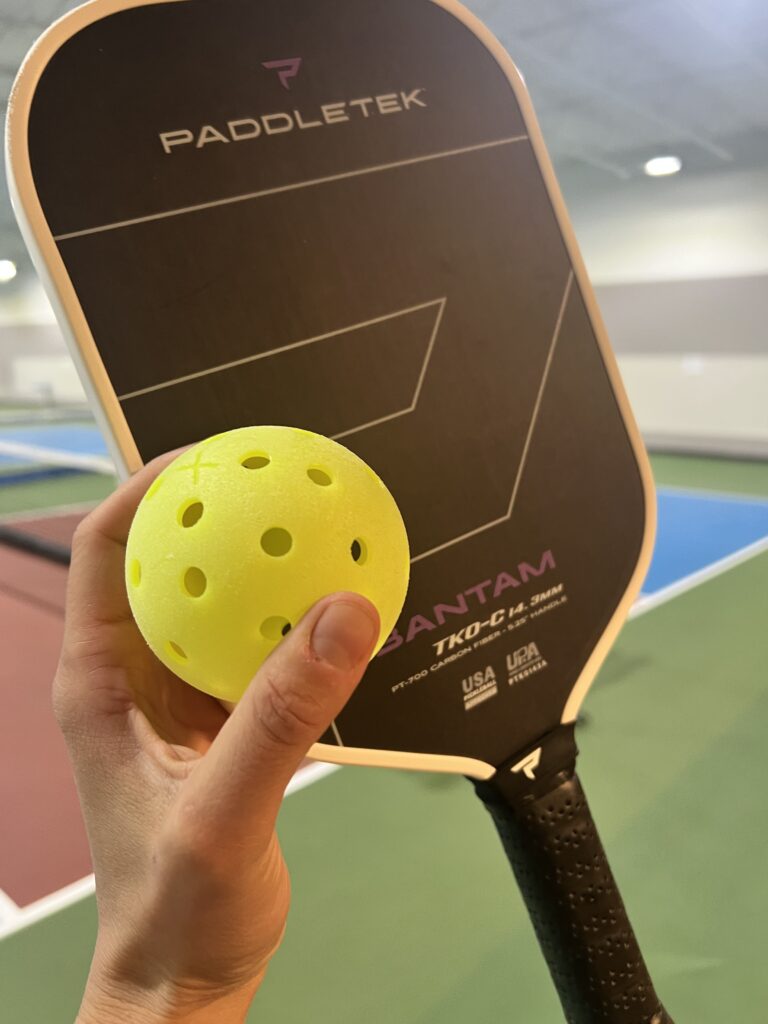
Paddletek Bantam TKO-C
The Bantam TKO-C is the better option for players who want a longer paddle face, greater reach, and more leverage on drives and serves. It retains the lively character of the Bantam family but trades some hand speed and width for an elongated offensive profile.
Choose the TKO-C when singles play, reach, and maximum putaway power matter more than a broad sweet spot.
Paddletek Tempest Wave Pro-C
The Tempest Wave Pro-C is a better match for players who prioritize touch, placement, and a calmer response. It will not provide the same explosive pop as the ESQ-C, but it is easier to manage during dinks, drops, and resets.
Control-first players and patient doubles specialists are more likely to prefer the Tempest.
RPM Q2
The RPM Q2 is a strong alternative for players who want a firmer, more connected feel with greater stability and plow-through. Its full-foam construction provides accessible power and a predictable response across the face, while its higher swing weight gives it more substance through drives, blocks, and off-center contact.
Choose the ESQ-C for faster hands and easier maneuverability; choose the RPM Q2 for added stability, forgiveness, and controlled aggression.
FAQs About the Paddletek Bantam ESQ-C Paddle
Is the Paddletek Bantam ESQ-C a power or control paddle?
The 12.7 mm ESQ-C is best classified as a power paddle because of its strong pop and immediate rebound. The 14.3 mm version is closer to an aggressive all-court paddle, offering similar baseline power with a slightly more controlled response.
Which ESQ-C thickness should I choose?
Choose the 12.7 mm model when maximum pop, fast counters, and offensive pressure are your priorities. Choose the 14.3 mm model when you want better touch, stability, and control without losing the paddle’s strong power and spin.
For most intermediate players, the 14.3 mm model is the safer and more versatile choice.
Is the Bantam ESQ-C good for beginners?
It is generally better suited to advancing intermediate and advanced players. Beginners may struggle to control its pop on dinks, resets, and blocks. A softer paddle can make it easier to develop consistent touch before moving to a more responsive design.
Is the ESQ-C good for two-handed backhands?
Yes. Its 5.5-inch handle provides enough space for most two-handed backhand grips. The longer handle also improves leverage and helps players generate additional spin and pace.
Is the Paddletek Bantam ESQ-C Paddle Right for You?
The Paddletek Bantam ESQ-C is a great pick for players who want to attack fast and hit with heavy spin, but don’t want a narrow, elongated paddle. Its wide face gives you stability and forgiveness, and the low swing weight makes it very effective for quick counters and fast kitchen play.
The 12.7 mm model is best for confident attackers who want instant pop and maximum offense. The 14.3 mm model is more balanced, keeping lots of power but making drops, resets, and defense a bit easier.
Players who focus on control might like a softer paddle with more dwell time. Beginners may also find the ESQ-C too lively until they get better at grip pressure and touch.
For advanced players who already possess a dependable soft game, however, the ESQ-C adds speed and finishing ability without feeling cumbersome. Its combination of power, spin, hand speed, and a two-handed-backhand-friendly handle earns it a well-justified 8.9 out of 10.
Still looking for the right paddle? Read our comprehensive pickleball paddle reviews.